
The Crisis Is the Condition: Why Mental Health Is Public Health
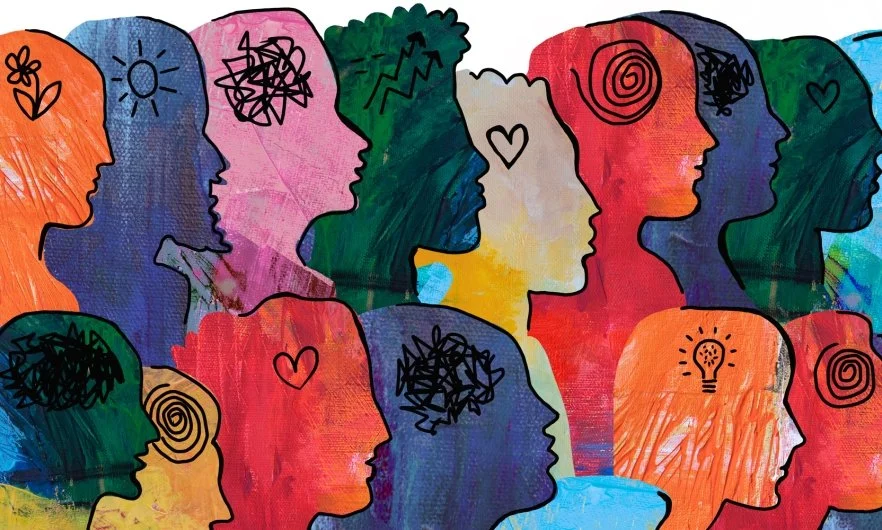
Mental Health is Public Health
Mental health is often talked about like it belongs entirely inside one person. Like it’s an individual issue.
This lady is anxious. This child is depressed. This teacher is burned out. This student cannot sleep, focus, rest, parent, work, connect, or keep going. We ask whether they are in therapy, whether they are taking medication, whether they have coping skills, whether they are making better choices, whether they have learned to regulate themselves enough to survive what life keeps asking of them.
Those questions can matter. I firmly believe therapy can change someone’s life. Medication can be lifesaving. Coping skills can give folks enough space to breathe. Still, when distress is showing up at this scale, across age groups, families, schools, workplaces, hospitals, shelters, prisons, and emergency rooms, it gets harder to pretend the crisis is only at the individual level.
The crisis is the condition.
Mental health is public health because the nervous system does not exist outside of housing, work, racism, food access, family stress, loneliness, community violence, migration stress, disability, medical debt, school safety, social connection, and whether care is available before someone hits a breaking point. The body is always taking in information from the environment. It is listening for danger and safety, for rejection and belonging, for scarcity and stability, for whether pain will be met with care, punishment, disbelief, or silence.
Globally, the scale is staggering. The World Health Organization reported in 2025 that more than 1 billion people are living with mental health conditions, with anxiety and depression among the most common, and called for urgent action to scale up mental health services. In the United States, SAMHSA’s 2024 National Survey on Drug Use and Health found that 61.5 million adults had any mental illness in the past year, while 14.6 million had serious mental illness. Among adults with any mental illness, only 52.1% received mental health treatment.
That treatment gap is not about people refusing to help themselves. It reflects what so many folks already know from experience: the waitlists that stretch for months, the therapists who do not take insurance, the insurance plans that technically cover mental health care while making it nearly impossible to use, the clinics that are understaffed, the transportation that does not exist, the language access that is missing, the stigma that makes people wait until things are unbearable, and the exhaustion of trying to advocate for yourself when the reason you need help is that you are already depleted.
The crisis is especially visible among younger folks, which is part of why it feels so urgent. CDC’s 2023 Youth Risk Behavior Survey found that 39.7% of high school students experienced persistent sadness or hopelessness, 28.5% experienced poor mental health, 20.4% seriously considered attempting suicide, and 9.5% attempted suicide.
These numbers aren’t just data points. They are a warning about the world young people are growing up inside, where school safety, family instability, economic precarity, social media pressure, racism, anti-LGBTQ hostility, academic pressure, community violence, climate anxiety, loneliness, and the absence of consistent adult support can all converge inside one developing nervous system.
Public health gives us a better way to understand this. It asks us to look at the conditions that make crisis more likely before someone is already in crisis. It asks where distress is concentrated, who is most affected, what protective factors reduce harm, and what systems need to change so fewer people are forced to break down before they receive support.
We already understand this with other forms of health. When children have asthma, we ask about air quality, mold, pollution, housing, inhalers, schools, and medical care. When communities have high rates of diabetes, we ask about food access, income, stress, neighborhood design, prevention, and treatment. Mental health deserves that same seriousness.
This is also why ACEs matter.
Adverse Childhood Experiences refer to potentially traumatic experiences in childhood, including abuse, neglect, violence in the home, household substance use, mental illness in the household, and incarceration of a family member. The original CDC-Kaiser ACE Study found a graded relationship between childhood adversity and later health risks, meaning that as exposure to ACEs increased, so did the risk of negative outcomes across mental health, substance use, and several leading causes of disease and death.
ACEs are often discussed as individual trauma histories, but they are also public health data. They show us that childhood conditions do not stay neatly in childhood. They can travel through the body, relationships, classrooms, workplaces, hospitals, and generations. They can show up later as depression, anxiety, addiction, chronic illness, difficulty trusting, difficulty resting, difficulty parenting, difficulty learning, difficulty staying employed, and difficulty feeling safe in the world.
This does not mean trauma determines a person’s future. It means early conditions matter, and prevention has to begin long before diagnosis, long before a child is old enough to explain what happened, and long before pain hardens into a lifelong survival strategy.
The CDC emphasizes that ACEs are common, that some groups experience them more than others, and that they can have long-term effects on health, opportunity, and well-being. That framing matters because it refuses to reduce trauma to a private wound. If childhood adversity is connected to adult health, then mental health prevention begins with stable housing, food security, childcare, school safety, violence prevention, parental support, economic stability, community connection, and care that arrives early enough to matter.
The same public health lens helps us understand loneliness and parental stress. The U.S. Surgeon General has named loneliness and social disconnection as public health concerns, linking poor social relationships to increased risk of heart disease and stroke, and describing social connection as a condition that shapes both individual and community well-being.
These are not side issues. A parent’s panic cannot be separated from childcare costs, unstable housing, inflexible work, isolation, debt, and the impossible expectation that love alone can compensate for the absence of public support. A young person’s hopelessness cannot be separated from under-resourced schools, fragile belonging, and the feeling that the future has become unstable before they have even reached adulthood. A survivor’s hypervigilance cannot be separated from what happened to them or from whether the systems around them offer safety, belief, repair, and protection now.
Mental health care that ignores these conditions will always be limited, even when it is compassionate and clinically sound. Someone can learn grounding skills and still return to an unsafe home. A child can be referred to therapy and still spend every day in a school where they feel targeted. A parent can be encouraged to practice self-care while lacking paid leave, affordable childcare, or stable housing. A young person can be told they matter while watching every system around them treat their future as negotiable.
This is not an argument against therapy, medication, crisis lines, hospital care, peer support, or community programs. It is an argument for taking them seriously enough to build them into the structure of public life, rather than treating them as scarce resources people have to fight for after they are already at the edge.
Right now, we tell people to reach out while sending them toward systems that are already overwhelmed. Care too often looks like long waitlists, expensive appointments, insurance barriers, overloaded emergency rooms, under-resourced schools, burned out clinicians, and jails absorbing crises that should have been met much earlier with treatment and support.
KFF’s data on mental health care Health Professional Shortage Areas shows that access depends not only on whether someone is willing to seek help, but also on whether enough providers exist where they live. Treatment Advocacy Center reported that the United States had 10.8 state psychiatric hospital beds per 100,000 people in its 2023 analysis, a figure that reflects the severe limits of the public safety net for folks in psychiatric crisis.
This is what underfunding looks like in real life: a teenager waiting months for an appointment after saying they do not want to be alive; a parent calling every number on an insurance list and finding no one accepting new patients; a therapist leaving community mental health because the caseload is impossible and the pay cannot sustain them; an emergency room holding someone in psychiatric crisis because there is nowhere safe to send them; a jail becoming the first place where untreated mental illness is finally recognized as urgent.
To say that mental health is public health is to say that care should function like infrastructure. It should be present before collapse, close enough to reach, affordable enough to use, culturally responsive enough to trust, and connected enough to the rest of life that people do not have to become emergencies before anyone notices their pain.
Care should live in schools, primary care offices, community centers, perinatal care, housing programs, workplaces, reentry programs, and youth spaces. It should treat loneliness as a health risk, parental stress as a community concern, suicide prevention as more than a hotline, and childhood trauma as something society has a responsibility to prevent.
The World Health Organization has called for countries to transform mental health systems by valuing mental health more deeply, reshaping the environments that influence mental health, and strengthening systems of care. That is the heart of the matter. The goal cannot be only more services after collapse, although we urgently need more services. The goal also has to be fewer conditions that push people toward collapse in the first place.
At NeuroBloom, we believe mental health care has to hold the person and the world around them in the same frame. A person may need therapy, medication, rest, coping skills, community, spiritual care, movement, boundaries, or a safe place to tell the truth. A population needs housing, livable wages, accessible care, food security, safe schools, culturally responsive services, family support, disability justice, anti-racist systems, violence prevention, social connection, and policies that reduce chronic stress instead of multiplying it.
Resilience is often described as though it is a personal trait, but folks are more able to cope when they have support, safety, connection, time, care, and stability.
A child with one steady adult is better supported. A parent with paid leave is living under a policy that protects family well-being. A worker with a humane schedule is living inside conditions that make balance possible. A community with accessible mental health care, safe public spaces, trusted schools, and strong social ties is healthier because care has been built into the environment rather than left to individual endurance.
Mental health is public health because people break down in patterns, and those patterns are shaped by policy, place, power, care, and access. When distress becomes widespread, the response has to become structural.
The mental health crisis is telling us that people are carrying too much alone, that our systems respond too late, that care is still treated like a privilege instead of infrastructure, and that distress does not stay contained inside one person. It moves through families, classrooms, workplaces, neighborhoods, hospitals, and generations.