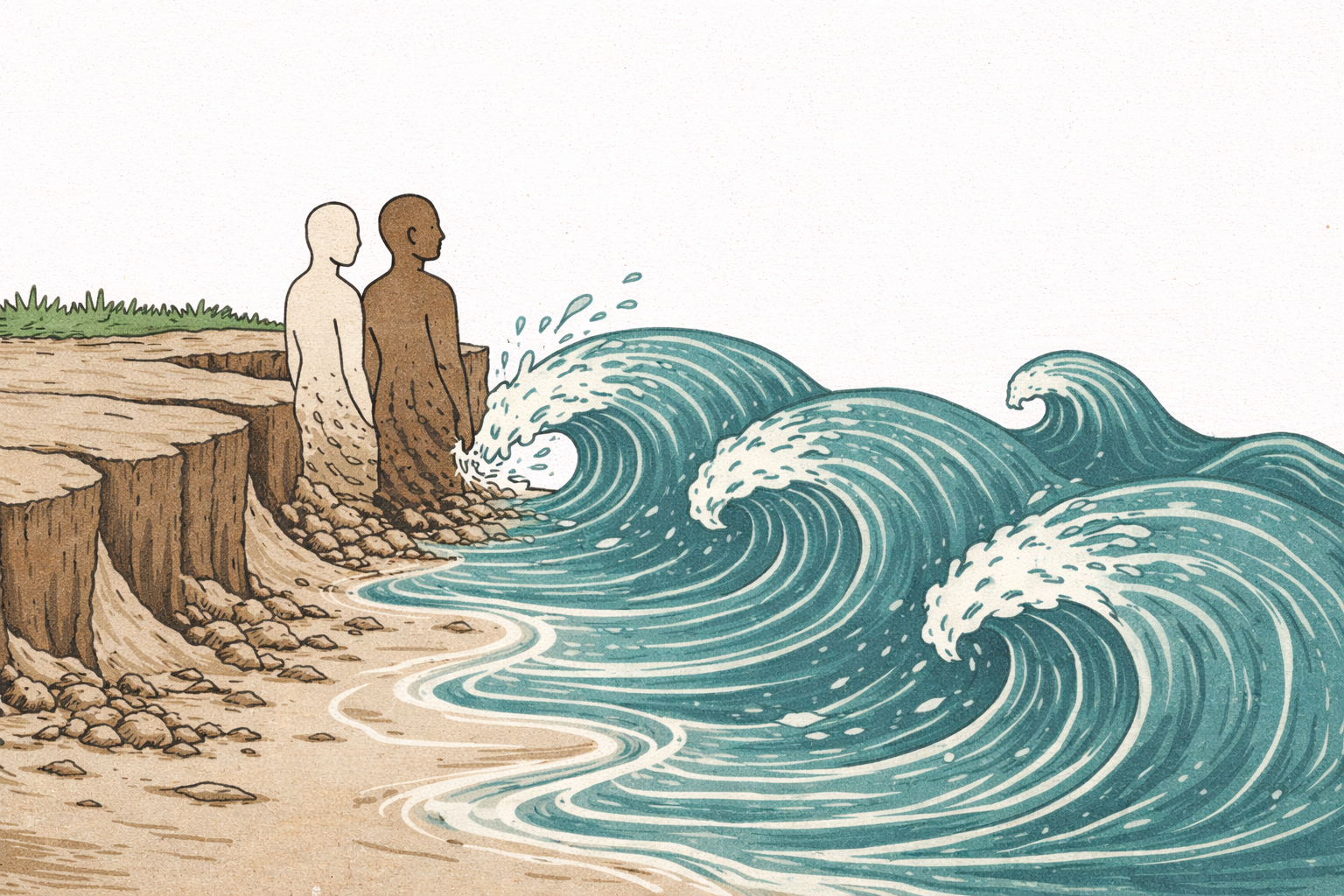
‘Weathering’: how racism and inequality are making people sick before their time
“Weathering is about how the body bears the cost of being socially marginalized.””
In public health, there is a word for what happens when inequality grinds the body down over time. It is called weathering.
The term describes how chronic exposure to stress caused by racism, poverty, and social marginalisation leads to faster biological ageing, earlier illness, and higher risk of death. It is not a metaphor. It is measurable in blood pressure, inflammation, immune response, and pregnancy outcomes.
And in the United States, it is killing people.
A theory born from a contradiction
The idea of weathering was developed by Arline Geronimus, who was studying racial disparities in birth outcomes in the late 1980s and early 1990s.
She noticed something that did not fit existing public health assumptions. For white women, delaying childbirth into their late 20s and 30s tended to improve maternal and infant outcomes. For Black women, the opposite was often true.
Older age was not protective. In many cases, outcomes worsened.
Geronimus argued that the reason was not genetics or poor decision-making, but cumulative stress exposure over the life course. The longer Black women lived in a society shaped by racial inequality, the more physiological damage accumulated.
How stress gets under the skin
Weathering works through systems meant to keep humans alive.
Short-term stress helps us respond to danger. Chronic stress does something else entirely.
When stress never fully switches off:
cortisol levels remain elevated
inflammation increases
immune function weakens
blood pressure rises
metabolic systems deteriorate
This is not about individual resilience. It is about what happens when vigilance becomes a permanent state.
Maternal health is where weathering becomes deadly
Few areas show the effects of weathering more clearly than maternal health.
In the US, Black women are three to four times more likely to die from pregnancy-related causes than white women. This gap persists across income and education levels.
Researchers have found that Black women experience higher rates of hypertension, preeclampsia, and preterm birth even when they receive prenatal care and have no obvious risk factors.
The explanation, weathering scholars argue, lies before pregnancy begins.
Why class alone does not explain the gap
One of the most uncomfortable findings in weathering research is that economic success does not offer equal protection.
Middle-class Black women often have worse maternal outcomes than low-income white women. Education helps. Income helps. But neither erases exposure to racism, workplace stress, surveillance, or discrimination in healthcare settings.
This challenges the idea that disparities can be solved by:
better health education
lifestyle changes
prenatal care alone
Weathering shows that lifetime conditions matter more than individual choices.
Racism is a health risk – literally
Public health frameworks often treat racism as a social issue and health as a medical one. Weathering collapses that distinction.
So is poverty. So is unsafe housing. So is insecure work. These are not background factors. They are exposures.
What weathering demands from public health
If weathering is real, then the focus of health policy must move upstream.
That means:
addressing maternal health across the life course, not only during pregnancy
reducing economic insecurity
tackling bias and mistreatment in healthcare
investing in housing, labour protections, and community-based care
treating racism as a measurable health risk
Healthcare systems cannot treat their way out of damage caused by inequality.
Why “Weathering” Matters Now More Than Ever:
Weathering gives a name to something many people recognise in their bodies.
Why illness arrives early.
Why exhaustion runs deep.
Why “doing everything right” still is not enough.
It tells us that bodies carry the imprint of the societies they live in. And when those societies are unequal, the damage is not abstract. It is biological.
Understanding weathering does not solve inequality. But it makes its consequences impossible to ignore.